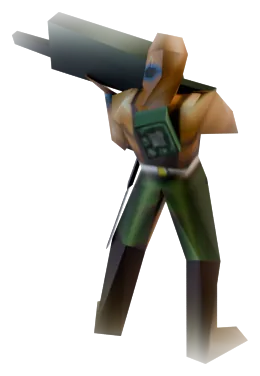
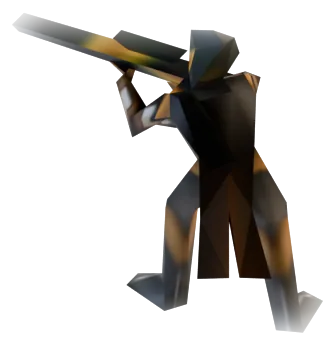
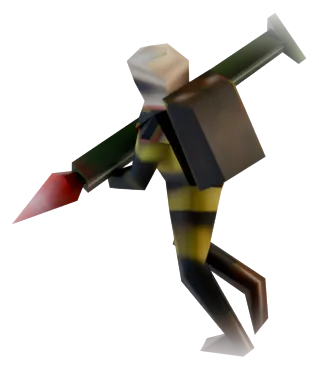


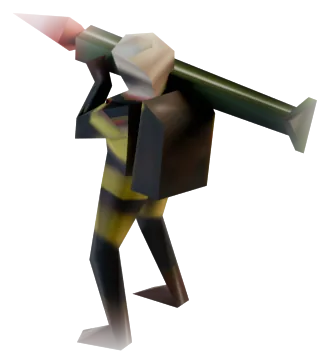
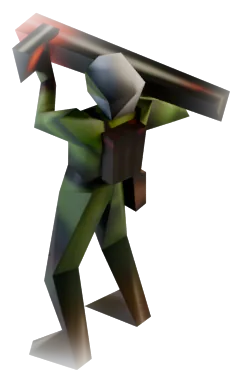
Zero Hour USA units win on quality: they cost more than Chinese or GLA units, but they live longer and shoot farther. The faction's best asset is its air force, from the Comanche to the Aurora Bomber. Below are unit and building tables from the Zero Hour INI files, version 1.04, plus tips for playing the USA on a phone.
Play style
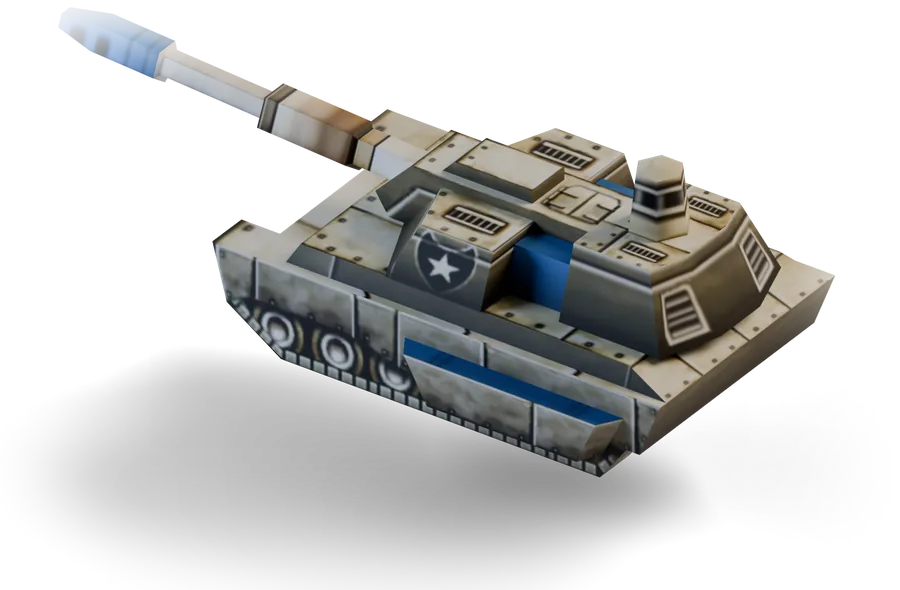
The game's own faction blurb says the USA relies on high-tech weapons and skill. In practice you field few units, each one is expensive, and every loss hurts. A good US army stays together, heals at the Ambulance and gets patched up by drones.
The faction's main cards:
- Air force: the Raptor against aircraft and vehicles, the Comanche against tanks, the Aurora for base strikes;
- Drones: the Scout, Battle and Hellfire Drones are bought as vehicle upgrades;
- Strategy Center: pick a battle plan that buffs the whole army;
- Particle Cannon: a beam you steer across the map yourself.
Economy and power
The USA gathers money with Chinook helicopters: 1200 each, 10 seconds to build, 300 health. A Chinook flies to supply docks on its own and carries crates back to the Supply Center. It is faster than the Chinese truck but fragile, and losing two Chinooks early sets you back badly.
The second income source is the Supply Drop Zone (2500, 45 seconds). A plane drops cargo there every so often, no supply docks needed.
US buildings need power. The Cold Fusion Reactor costs 800, builds in 10 seconds and has 800 health. That is less than the Chinese reactor (1500), so US reactors are an easy raid target. When power runs short, the radar and base defenses shut down.
Main USA units
Damage is per shot, range and speed are in game units. Source: Zero Hour 1.04 files.
| Unit | Cost | Time, s | Health | Main weapon: damage / range |
|---|---|---|---|---|
 Ranger |
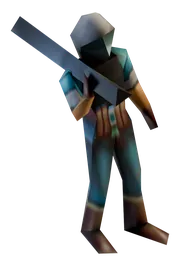
225 | 5 | 180 | rifle 5 / 100 |
 Missile Defender |
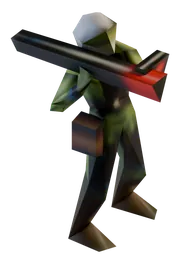
300 | 5 | 100 | missile 40 / 175 |
 Pathfinder |
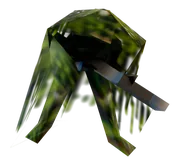
600 | 10 | 120 | sniper rifle 100 / 300 |
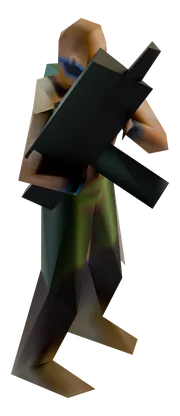 Colonel Burton |
1500 | 20 | 200 | rifle 40 / 125 |
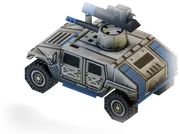 Humvee |
700 | 10 | 240 | machine gun 10 / 150, TOW vs air 50 / 320 |
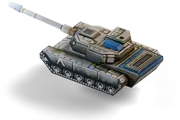 Crusader |
900 | 10 | 480 | cannon 60 / 150 |
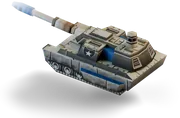 Paladin |
1100 | 12 | 500 | cannon 60 / 150 |
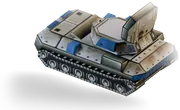 Microwave Tank |
800 | 10 | 480 | disables buildings, 200 |
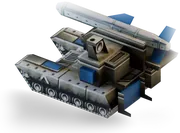 Tomahawk |
1200 | 20 | 180 | cruise missile 150 / 350 |
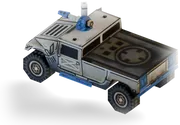 Avenger |
2000 | 10 | 300 | anti-air laser, 175 |
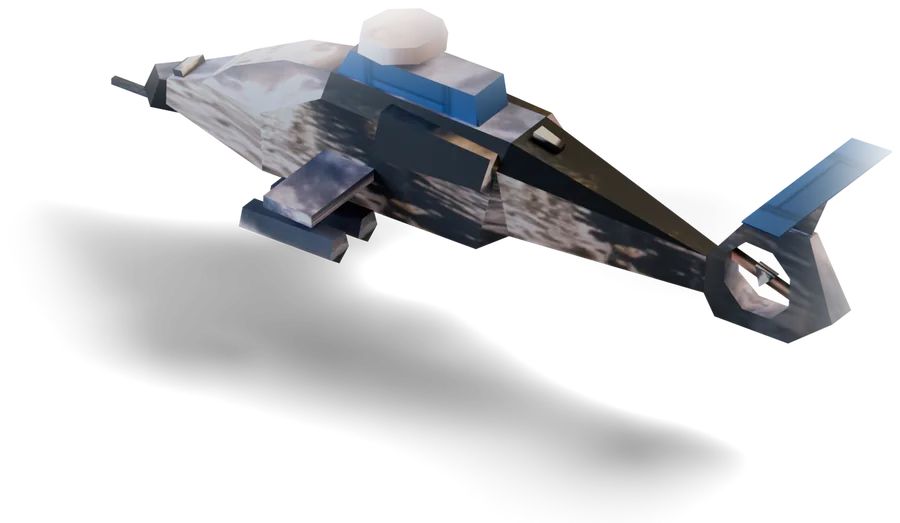
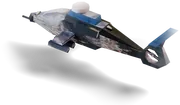 Comanche |
1500 | 20 | 220 | rockets 50 / 200 |
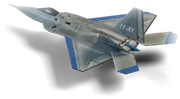 Raptor |
1400 | 20 | 160 | missiles 100 / 320 |
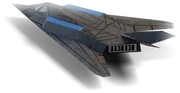 Stealth Fighter |
1600 | 25 | 120 | missiles 100 / 220 |
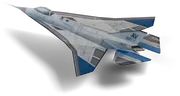 Aurora Bomber |
2500 | 30 | 80 | bomb 400 / 300 |
The Paladin costs 200 more than the Crusader, yet both carry the same 60-damage gun. You pay for 20 extra health and a point-defense laser that shoots down missiles flying at the tank. The Aurora has the lowest health in the table, 80, but on its approach it is almost untouchable: defenses simply don't get a shot off in time.
Real-world prototypes of USA units
Almost the entire US army in Generals is copied from real hardware or named after it. Here is what stands behind each unit in the table.
- Ranger. A nod to the US Army's 75th Ranger Regiment: light infantry for raids and airfield seizures.
- Missile Defender. Closest to the crews of the FGM-148 Javelin anti-tank missile, which the US Army received in 1996. The laser target designation in the game is made up: a real Javelin locks on through a thermal image and flies on its own after launch.
- Pathfinder. The name comes from pathfinders, paratrooper scouts who jump first and mark the landing zones. The Americans formed such teams in World War II. In the game the Pathfinder works as a sniper in a ghillie suit.
- Colonel Burton. A fictional hero, a composite image of a special operations officer.
- Humvee. This is the HMMWV by AM General, a military off-road vehicle in service since 1985. The TOW missile version that the upgrade gives you exists too.
- Crusader. The model in the game files is called AVLeopard: it looks like a mix of the German Leopard 2 and the American M1 Abrams. The name Crusader belonged to a British World War II tank and to the American XM2001 self-propelled howitzer, whose program was cancelled in 2002.
- Paladin. The name is borrowed from the M109A6 Paladin self-propelled howitzer, in US Army service since the 1990s. The anti-missile laser is the developers' invention. Real tanks are covered by active protection systems such as Israel's Trophy, but those fire projectiles, not a beam.
- Microwave Tank. The prototype is the Active Denial System, a device that heats the skin with millimeter waves and makes people leave the area. The Pentagon unveiled it in 2001, mounted on a Humvee. The real system can't disable buildings.
- Tomahawk. The BGM-109 Tomahawk cruise missile, a weapon of US ships and submarines since the 1980s. A ground-launched version on a wheeled chassis existed too, but by 1991 it had been scrapped under the Intermediate-Range Nuclear Forces Treaty.
- Avenger. The name comes from the AN/TWQ-1 Avenger air defense system: a Humvee with eight Stinger missiles. In the game the Avenger runs on tracks, and its laser marks aircraft for the whole army.
- Comanche. The RAH-66 Comanche, a stealthy reconnaissance and attack helicopter. Two prototypes were built, the first flew in 1996, and the program was cancelled in 2004. The Comanche never entered service.
- Raptor. Lockheed Martin's F-22 Raptor fighter. When Generals came out in 2003, it was still in testing: it entered service in December 2005.
- Stealth Fighter. This is the F-117 Nighthawk, the first production stealth aircraft. It flew from 1981, was shown to the public in 1988 and retired in 2008.
- Aurora Bomber. No prototype. "Aurora" is a rumored secret hypersonic reconnaissance aircraft that people have talked about since the mid-1980s. It has never been officially confirmed.
- Chinook. Boeing's CH-47 Chinook, a heavy tandem-rotor helicopter, in US Army service since 1962.
Among the buildings, the Patriot Missile System has a real prototype: the MIM-104 Patriot has been in US service since 1984.
Key buildings
| Building | Cost | Time, s | Health |
|---|---|---|---|
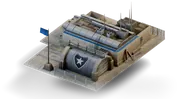 Command Center |
2000 | 45 | 5000 |
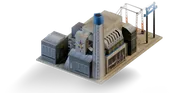 Cold Fusion Reactor |
800 | 10 | 800 |
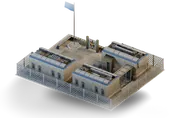 Barracks |
600 | 10 | 1000 |
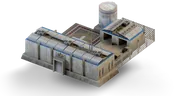 Supply Center |
2000 | 10 | 2000 |
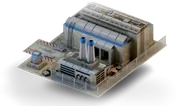 War Factory |
2000 | 15 | 2000 |
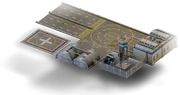 Air Field |
1000 | 30 | 1500 |
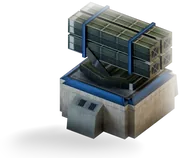 Patriot Missile System |
1000 | 25 | 1000 |
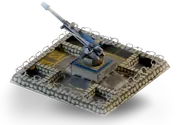 Fire Base |
1000 | 25 | 1000 |
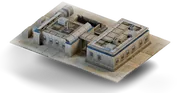 Strategy Center |
2500 | 60 | 1500 |
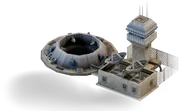 Particle Cannon |
5000 | 60 | 4000 |
The Patriot hits ground targets for 30 damage at range 225 and air targets for 25 at range 350. The Fire Base reaches farther and hits harder, 75 damage at 275, and infantry can garrison it.
Strengths and weaknesses
What the USA does well:
- the air force covers almost any job, from tank hunting to taking out a superweapon;
- units are durable, and the Ambulance and Repair Drones bring them back into the fight;
- the Pathfinder, with range 300, picks off infantry before it gets close.
Where the USA struggles:
- an expensive start: a reactor, barracks and two Chinooks eat the starting money faster than on other sides;
- reactors with 800 health go down quickly, leaving the base without defenses;
- the army is hard to replace: losing five Paladins costs 5500.
Three US generals push different sides of the faction: Granger bets on aircraft, Townes on lasers, and Alexander on defense and superweapons.
Matchups
Against China, keep your distance. The Tomahawk fires at 350 and the Pathfinder at 300, while the Overlord's cannon reaches only 175. An infantry horde is easiest to break with the Aurora or the Particle Cannon.
Against GLA, guard your vehicles from Hijackers and escort your Chinooks: a Quad Cannon costs 700 and shoots down a supply helicopter with ease.
Playing the USA on a phone
The US army is small, which suits a touch screen. Three or four groups on the left-hand bar are enough:
- Box-select your tanks (press and drag) and tap an empty slot "1": the group is saved.
- Put aircraft in "2". A tap on a filled slot selects the planes, and a double tap also moves the camera to them.
- Keep infantry and the Ambulance in "3" so healing follows the tanks.
A simple way to send aircraft: select the group, pan the camera to the target with two fingers and tap it. Holding a UI button shows its tooltip without pressing it, handy for checking an upgrade price. All gestures are on the controls page.
Aiming the Particle Cannon on a phone is arguably easier than with a mouse: tap the target point and the beam does the rest. Just remember that a long press of about 0.6 seconds cancels a selected ability.
FAQ
Which US unit is most useful early on?
The Humvee: 700, 10 seconds, 240 health, fast and flexible. After the TOW Missile upgrade it hits air targets at 320, and with Missile Defenders inside it is dangerous to tanks too.
What is the difference between the Crusader and the Paladin?
In the 1.04 files both have the same gun, 60 damage at 150. The Paladin costs 200 more, has 500 health instead of 480 and carries a laser that shoots down missiles.
Do all US buildings need power?
Yes. Without power the radar, base defenses and some building functions go offline. The buildings themselves are not destroyed, but only your army is left to defend the base.
Can I play the USA online from a phone?
Yes. ZeroFront supports Wi-Fi LAN games and online play through Generals Online. See the multiplayer page for setup.
Try the US army on your own phone through the bot @generals_mobile_bot: 24 hours of free access. Back to the Zero Hour wiki index, or read how the game runs on Android.